

If your aquarium was peaceful yesterday but looks tense today, you may wonder why fish suddenly chase each other. A sudden pursuit can look alarming, yet it doesn’t always mean the fish are fighting. Chasing can come from breeding instincts, territorial disputes, social ranking, stress, or a recent change inside the aquarium.
What Causes Fish to Suddenly Start Chasing Each Other?
Fish behavior can change quickly because their social environment isn’t fixed. A tank that appears calm to us may contain territories, breeding relationships, and subtle hierarchies that shift as fish mature.
Understanding the reason for the chase starts with watching what happens before, during, and immediately afterward.
Territorial Behavior, Dominance, and Changes in the Social Hierarchy
Territory is one of the most common reasons fish chase tank mates. Some species defend caves, plants, rocks, corners, or particular areas near the bottom. A fish entering that space may be driven away.
This can seem sudden even when the fish have lived together for months. As fish grow, their need for space may increase. A young fish that tolerated others can become more territorial as it reaches adulthood.
Social rank matters too. Many fish establish a hierarchy within their group. Occasional chasing may help maintain that order. Problems arise when one fish constantly targets another and gives it no chance to rest.
Changes within the group can restart these disputes. Adding a fish, removing one, or losing a dominant individual may cause the remaining fish to reestablish their positions.
Mating, Spawning, and Reaching Sexual Maturity
If you’re wondering why fish suddenly chase each other when nothing in the aquarium has changed, maturity may be the answer.
Breeding behavior can appear almost overnight. Males of some species pursue females during courtship. Others become territorial when preparing a spawning site. Once eggs appear, normally tolerant parents may aggressively defend the surrounding area.
Courtship chasing often looks different from outright bullying. The fish may display their fins, circle each other, swim together, or repeatedly return to a chosen spawning area.
Still, mating behavior can exhaust the fish being pursued. A female constantly chased by several males may become stressed even if the behavior is natural—suitable sex ratios, hiding places, and enough space become especially important during breeding periods.
How Can You Tell Whether Fish Are Fighting, Mating, or Socializing?
A few seconds of chasing tells you very little. The pattern matters more than the chase itself.
Observe which fish starts the pursuit, how often it happens, and whether the target can move away safely. Also check the fish later rather than judging the situation during one dramatic moment.
Signs That Chasing Is Normal Fish Behavior
Brief chasing can be part of ordinary aquarium life. Schooling and social species may occasionally pursue each other while establishing position within the group. Breeding fish can also become much more active.
The strongest clue is what happens afterward.
If both fish return to normal swimming, feeding, and resting, there’s little reason for concern. Healthy fins and normal coloration are also reassuring signs.
Some species naturally interact more forcefully than others. That is why knowing your species’ normal behavior matters. A chase that seems aggressive in one species may represent routine social behavior in another.
Warning Signs That Chasing Has Become Aggressive
Aggression usually becomes repetitive and unequal. One fish does most of the chasing while another spends much of its time escaping.
Watch for torn fins, damaged scales, rapid breathing, hiding, faded coloration, or reduced appetite. A bullied fish may stay behind equipment or remain near the surface because it can’t safely enter the rest of the aquarium.
Feeding offers another useful clue. If one fish repeatedly drives another away from food, the problem has moved beyond harmless interaction.
Persistent stress can weaken a fish over time. Even without visible injuries, a fish that cannot feed or rest normally needs attention.
How Aquarium Conditions Can Trigger Sudden Chasing
Sometimes the real problem isn’t either fish’s personality. The aquarium itself may be increasing competition.
Tank Size, Overcrowding, and Too Few Hiding Places
Space affects how easily fish can avoid conflict. In a small or heavily stocked aquarium, a subordinate fish may have nowhere to retreat when challenged.
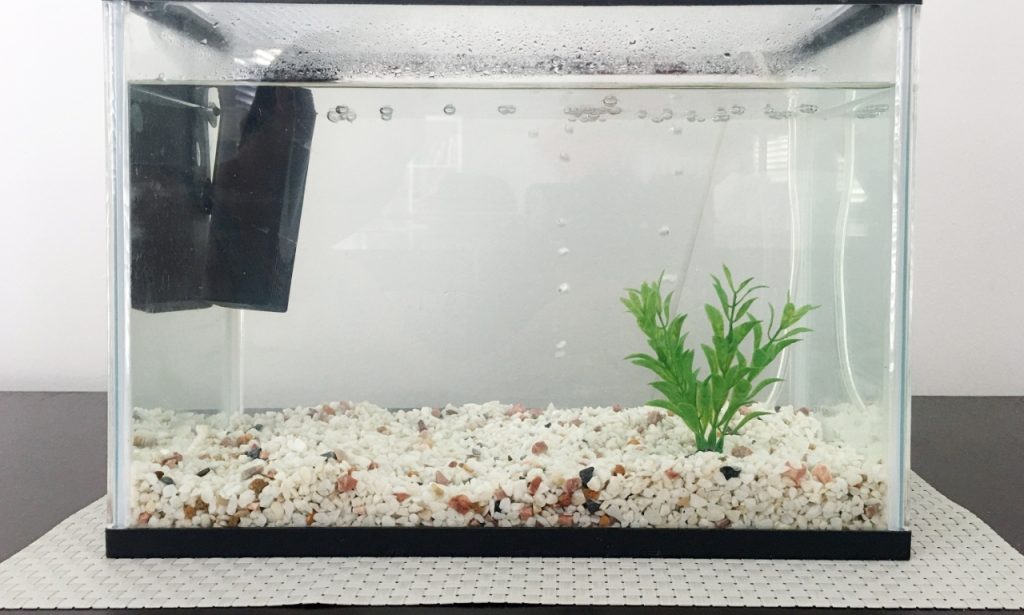
The layout matters as much as total volume. An open tank gives a dominant fish a clear view of potential rivals. Plants, rocks, wood, and suitable shelters can break those sightlines and create separate areas.
Fish growth can also turn a previously suitable aquarium into a crowded one. Several juveniles may coexist comfortably at first. Months later, their adult bodies and territories require considerably more room.
Research adult size rather than judging stocking levels by the fish’s current size.
Water Quality, Feeding Competition, and Environmental Stress
Poor conditions can also change behavior. Ammonia, nitrite, unsuitable temperature, unstable water chemistry, or low oxygen can place fish under physiological stress.
Check water parameters if fish suddenly start chasing each other, especially if several inhabitants are behaving differently.
Food creates another source of competition. If every meal enters one small area, dominant fish can control access. Spreading food across several areas may let timid fish eat without constantly approaching aggressive tank mates.
Changes in lighting and excessive disturbance can add further stress. Rather than treating chasing as an isolated behavior, look at the whole environment.
Why Fish May Start Chasing After Something Changes in the Tank
Sudden aggression often follows a change that seemed minor to the aquarium keeper. To the fish, that same event may have altered the entire social map.
Adding New Fish or Losing an Established Tank Mate
Introducing a newcomer can disrupt territories immediately. Established fish may see the newcomer as a competitor for food, space, or breeding opportunities.
The opposite can happen after a fish disappears. If an established member dies or is removed, the group’s hierarchy may shift. Remaining fish can begin competing for the vacant position.
Compatibility therefore involves more than choosing peaceful species. Group size, sex ratios, adult size, temperament, and swimming level all influence how fish interact.
Rearranging Decorations, Cleaning the Tank, or Fish Growing Larger
Fish often use physical features as territorial boundaries. Moving rocks, caves, wood, or plants can erase familiar landmarks.
A major tank cleaning may have a similar effect if the entire layout changes. Fish that previously occupied separate areas can suddenly encounter each other more often.
Growth is easier to overlook. A fish may have reached an age where its adult instincts are becoming stronger. What looks like a sudden personality change may actually be normal development.
What Should You Do When One Fish Keeps Chasing Another?
Don’t react to every brief pursuit by immediately removing a fish. First determine whether the behavior is occasional or persistent and whether either animal is being harmed.
Adjust the Tank Before the Chasing Causes Chronic Stress
Start by checking water quality and temperature. Then consider whether the aquarium provides enough usable space for the species you keep.
Look at the layout from the fish’s perspective. Can a weaker fish get out of the dominant fish’s view? Are there several shelters, or does every fish compete for the same cave?
Adding appropriate plants and structures can create visual boundaries. Feeding in multiple areas can also reduce competition.
Review the species themselves. Fish sold together aren’t automatically compatible. Some require schools, others form pairs, and certain species become highly territorial as adults.
Know When Chasing Requires Separation or a Long-Term Change
Intervention becomes necessary when a fish is injured, constantly cornered, prevented from eating, or showing persistent signs of stress.
Temporary separation may provide immediate relief while you identify the cause. However, simply returning the fish without changing anything may restart the conflict.
Sometimes you can’t solve the issue by adding another plant or hiding place. Two incompatible species may require separate aquariums. An unusually aggressive individual may also need different housing.
The goal isn’t to eliminate every chase. Fish have social behaviors that won’t always look peaceful to human observers. The priority is making sure each fish can eat, swim, shelter, and rest without continuous harassment.
Conclusion
So why do fish suddenly chase each other? The answer usually lies in territory, breeding, social hierarchy, maturity, environmental stress, or a recent change within the aquarium. The behavior matters less than its frequency and effect on the pursued fish.
Brief chasing followed by normal activity may need nothing more than observation. Constant pursuit, injuries, hiding, or missed meals deserve a closer look at water quality, stocking, compatibility, space, and tank layout. Watching the pattern rather than reacting to a single chase is often the best way to understand what your fish are communicating.
Frequently Asked Questions
Fish may engage in playful-looking social interactions, although chasing often has a clearer purpose such as courtship, competition, or establishing social position.
Yes. Sudden or overly intense lighting can stress some fish. Providing a consistent light cycle and suitable shelter can help.
Some territorial fish interpret their reflection as another fish entering their space and may repeatedly display or charge at the glass.
Some fish can distinguish familiar individuals. Recognition may influence social hierarchy, territorial relationships, and group behavior.
Reducing stimulation may temporarily calm some fish, but it doesn’t solve persistent aggression. You still need to identify the underlying cause.
